

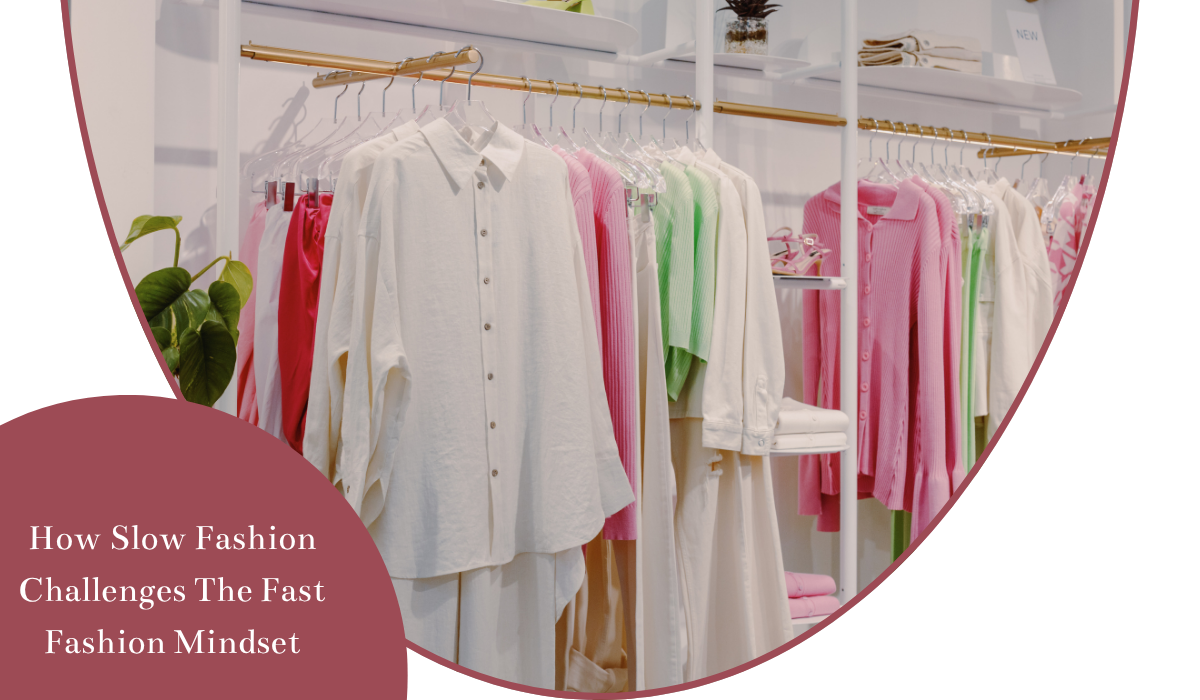
The rise of slow fashion is not just a trend—it’s a direct response to the environmental, ethical, and cultural problems created by fast fashion. While fast fashion focuses on speed, low cost, and constant newness, slow fashion promotes mindful consumption, quality, and sustainability.
Slow fashion challenges the fast fashion mindset by redefining what it means to consume fashion responsibly. It replaces speed with intention, excess with sustainability, and trends with timeless value. As awareness grows, more consumers are choosing quality over quantity—helping to reshape the future of the fashion industry.
After decades of dominance by fast fashion—characterized by rapid production, low prices, and constantly changing trends—the industry is now undergoing a deliberate shift toward sustainability. This transition has given rise to the slow fashion movement, which prioritizes quality, ethical practices, and environmental responsibility over speed and mass production. However, despite its growing appeal, slow fashion faces significant challenges when it comes to large-scale business adoption, including higher production costs, limited scalability, and changing consumer expectations.
The Revolution from Fast to Slow Fashion
The history of fast fashion can be traced back to the Industrial Revolution, when innovations such as sewing machines and synthetic fabrics transformed clothing production. By the early 2000s, global fashion giants like Zara and H&M had perfected a rapid production model that brought runway-inspired trends to the mass market in record time. More recently, ultra-fast fashion retailers such as SHEIN and Temu have intensified this system by releasing thousands of new styles each week at extremely low prices.
The term fast fashion was first popularized by The New York Times in 1989, following Zara’s entry into the New York market. This marked the beginning of a new retail era defined by high product turnover, mass consumption, and trend-driven purchasing behavior.
However, this rapid growth has come at a significant environmental and social cost. According to McKinsey, millions of tons of clothing are discarded each year, with a large portion made from polyester—a petroleum-based fabric that releases microplastics into water systems. The fast fashion model is widely associated with environmental pollution, textile waste, labor exploitation, and unethical production practices.
The Core Philosophy of Slow Fashion
Slow fashion represents a revival of craftsmanship, responsible manufacturing, and the use of sustainable materials. The movement was popularized by sustainability theorist Kate Fletcher, who advocates for producing fewer garments of higher quality that are designed to last longer. It aligns closely with the principles of a circular economy, emphasizing repair, reuse, and recycling as key practices to reduce waste and extend product life cycles. In addition, slow fashion promotes ethical labor practices and greater transparency throughout the supply chain.
Key Slow Fashion Challenges Facing the Industry
1. Transparency and Ethical Supply Chains
One of the most complex challenges in slow fashion is establishing fully transparent and ethical supply chains. The tragic Rana Plaza collapse in Bangladesh serves as a painful reminder of the industry’s historical failures regarding worker safety and ethical oversight. While slow fashion strongly promotes fair wages, safe working conditions, and responsible sourcing, achieving complete transparency—from raw materials to the final retail product—remains both difficult and costly.
Many small and medium-sized brands also face limitations in adopting advanced traceability systems and third-party audit frameworks, making it harder to verify and communicate their ethical commitments. Without stronger technological investment and international collaboration, supply chain transparency is likely to remain a significant challenge for the industry in 2025 and beyond.
2. Poor Scalability and High Cost of Production
The use of sustainable materials, fair wages, and small-batch production significantly increases manufacturing costs. As a result, many slow fashion brands primarily serve niche markets of consumers who are willing to pay higher prices for ethical and sustainable products. However, for the movement to achieve meaningful global impact, it must become both more affordable and more scalable without compromising its core values.
3. Misleading Marketing and Greenwashing
Another major challenge facing slow fashion is greenwashing, a practice in which brands falsely claim to be sustainable or exaggerate their environmental efforts. In recent years, many fast fashion companies have introduced “eco-friendly” or “conscious” collections while maintaining largely unchanged production systems. This creates confusion among consumers, allowing brands to appear sustainable without making meaningful structural changes. As a result, greenwashing not only misleads consumers but also undermines genuine efforts toward real sustainability in the fashion industry.
4. Consumer Awareness and Behavioral Change
Consumer behavior plays a crucial role in addressing the challenges of slow fashion. Years of exposure to low-cost, fast-moving fashion have conditioned many buyers to prioritize quantity over quality. As a result, increasing awareness of the environmental and social impacts of fashion is essential, and this can be achieved through education and public engagement.
On a positive note, initiatives such as clothing rental services, second-hand retailing, and garment repair programs are gaining popularity worldwide. These approaches help reduce textile waste and extend the lifecycle of clothing, aligning closely with slow fashion principles. However, achieving large-scale behavioral change remains a long-term challenge that requires both education and supportive incentives to encourage more sustainable consumption habits.
5. Innovation and Technology Gaps in Adoption
Innovation plays a vital role in addressing the challenges of slow fashion. Emerging technologies such as blockchain, artificial intelligence, and digital product IDs can significantly improve traceability and supply chain management. In addition, material innovations like biodegradable fibers, waterless dyeing techniques, and 3D knitting have the potential to reduce waste and lower environmental impact.
However, one of the key slow fashion challenges is the slow adoption of these technologies across the industry. Bridging this gap requires faster implementation through strategic partnerships, investment in research and development, and supportive government incentives that encourage sustainable innovation.
The Future of Slow Fashion
Despite its challenges, slow fashion is steadily reshaping the future of the clothing industry. According to The Business of Fashion, 2025 is expected to be a turning point, where brand survival will increasingly depend on circular design principles, traceable sourcing, and strict regulatory compliance.
Moving forward, manufacturers, designers, policymakers, and consumers must collectively redefine the fashion value chain. Governments can support this transition through tax incentives and environmental regulations that encourage sustainable practices. At the same time, brands must prioritize long-term transparency and sustainability over short-term profit.
Advancements in research and technology are also driving innovation within the industry. Alternatives to leather, recyclable polyester, and closed-loop production systems are making sustainable fashion more practical and scalable. As these innovations expand and become more accessible, ethical fashion has the potential to move beyond a niche luxury market and become a global standard.
Conclusion
The development of a sustainable fashion ecosystem is both complex and highly significant. The core vision of the slow fashion movement is to create clothing that respects both people and the planet. However, achieving this vision is challenged by economic, ethical, and technological barriers that continue to shape the industry’s transformation.
Slow fashion is no longer only a moral choice; it is becoming a strategic necessity for brands that aim to remain relevant in an increasingly conscious global market.
By directly addressing the challenges associated with slow fashion, the industry can move toward a future where profitability and responsibility coexist. In this way, fashion has the potential to evolve into a powerful force for positive environmental and social change.





Leave a Reply