

Introduction
Weddings mark one of life’s most significant milestones, and the wedding dress often becomes the centerpiece of the occasion. Choosing a wedding dress goes far beyond aesthetics—it is a technical, emotional, and often cultural decision.
With years of experience working with apparel and textile materials, I have observed that many brides tend to focus primarily on visual appeal. However, the true comfort and lasting beauty of a dress depend largely on fabric behavior, garment construction, and precise fitting. A dress may appear flawless on a hanger, yet feel entirely different when worn continuously for eight to twelve hours.
Different Wedding Dress Styles
Wedding dress styles are typically chosen based on body shape, the formality of the ceremony, and personal preference. Designers often rely on a core set of classic silhouettes because they consistently complement a wide range of body proportions.
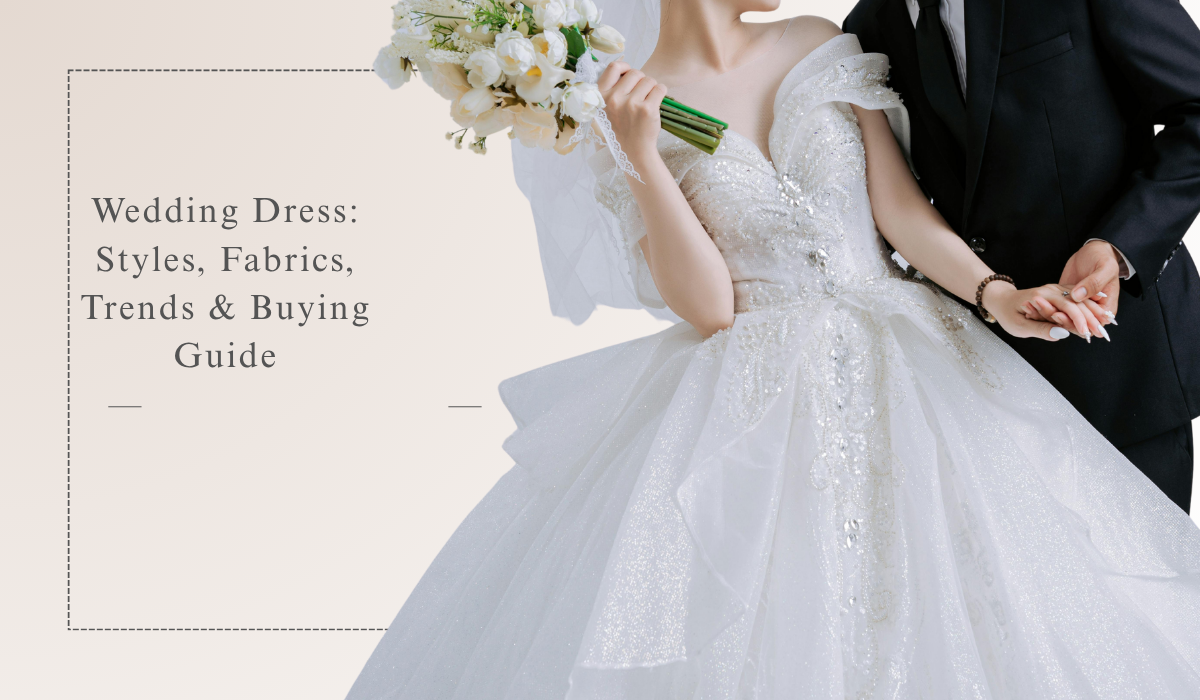
Common styles such as A-line, ball gown, mermaid, sheath, and empire waist continue to dominate bridal fashion due to their proven structure and versatility. Modern bridal collections clearly demonstrate how these timeless silhouettes remain central to professional wedding dress design, while still allowing room for contemporary details and customization.
A-Line Dress
The A-line wedding dress is one of the most popular and universally flattering silhouettes. It is fitted through the bodice and gradually flares out from the natural waist, creating the characteristic shape of the letter “A.”
This style complements a wide range of body types because it provides structure without clinging too tightly to the body. From a construction perspective, A-line dresses allow greater ease of movement and enhanced comfort, making them especially suitable for long ceremonies and extended wear.
Ball Gown
Ball gowns are formal, structured, and highly dramatic in appearance. This silhouette features a closely fitted bodice paired with a voluminous, full skirt, creating a classic and regal look.
From a construction standpoint, ball gowns require substantial internal support. This is typically achieved through multiple fabric layers, interlining, and structural elements such as crinoline net or horsehair braid. Due to the overall weight of the garment, precise stitch tension and strong waist reinforcement are essential. Without proper construction, the dress may begin to sag and lose its shape after several hours of wear.
Mermaid Style
The mermaid wedding dress is designed to closely contour the body through the bust, waist, and hips, before flaring out at or just below the knee. This creates a highly defined and dramatic silhouette, emphasizing natural curves.
Due to its body-hugging structure, this style requires extremely precise measurements and expert pattern cutting. Even a minor fitting error—such as a deviation of just one centimeter—can be immediately noticeable and affect both appearance and comfort.
From a material perspective, stretch woven fabrics or core-spun blends are typically preferred. Fully rigid fabrics are rarely suitable, as they can significantly restrict movement and reduce wearability over extended periods.
Empire Waist
The empire waist wedding dress features a seam line positioned just below the bust, with the skirt flowing freely from that point. This silhouette is lightweight, comfortable, and particularly well suited for outdoor or warm-weather weddings due to its breathable and non-restrictive design.
From a textile perspective, fabrics with a soft hand feel and high drape—such as chiffon, georgette, or lightweight silk—are essential for this style to perform effectively. These materials allow the garment to fall naturally, enhancing both comfort and visual elegance.
Fabrics Used in Wedding Dress Manufacturing
Fabric selection is one of the most critical decisions in wedding dress design. The same pattern can look and behave like an entirely different garment depending on the material used. Fabric influences not only the visual appearance but also the comfort, structure, and durability of the dress.
Satin
Satin is a smooth, lustrous, and moderately heavy woven fabric known for its high specular reflection, which gives it a distinctive glossy finish. This quality makes it a popular choice for formal and traditional wedding dresses, where a refined and elegant appearance is desired.
However, satin is also highly sensitive to creases, pressure marks, and surface imperfections. As a result, it requires careful handling, professional pressing, and proper storage before the event to maintain its pristine look.
Tulle
Tulle is a lightweight, open-structured net fabric commonly used for veils, overlays, and voluminous skirts. It is most often seen as a supporting layer beneath ball gown skirts, where it helps create dramatic volume without adding significant weight.
Despite its airy structure, tulle is typically paired with a solid lining to prevent transparency and ensure comfort. Its ability to add fullness while remaining light makes it an essential material in many bridal designs.
Lace
Lace is one of the most iconic and versatile fabrics used in wedding dress design. It can be applied as decorative detailing, incorporated into sleeves, or used as the primary outer fabric of the entire gown, creating a timeless and romantic bridal aesthetic.
From a technical standpoint, lace demands a high level of precision in both cutting and stitching. The surface patterns must align perfectly across seams to maintain visual continuity. This level of detail is often what distinguishes high-quality bridal craftsmanship from lower-quality production.
Chiffon
Chiffon is a lightweight, plain-weave fabric known for its soft texture and semi-transparent appearance. It is commonly used for accent details such as sheer sleeves, overlays, and flowing overskirts, adding elegance and movement to a wedding dress.
One of chiffon’s key advantages is its excellent drape, which allows the fabric to move gracefully with the wearer. This makes it especially suitable for outdoor and warm-weather weddings.
However, chiffon is a delicate material that requires careful handling and specialized finishing techniques, such as rolled hems or French seams, to prevent fraying. Due to its fine structure, it is also prone to snagging and pulling, so proper construction and maintenance are essential to preserve its quality during wear.
Organza
Organza is a crisp, plain-weave fabric that is similar in weight to chiffon but significantly stiffer in structure. Its sheer and lightweight nature makes it an excellent choice for warm-weather weddings, where breathability and volume are both important.
This fabric holds shape and structure very well, which is why it is commonly used in layered or structured skirts. Despite its strength in maintaining form, organza has relatively low tear resistance and therefore always requires a supportive lining to ensure durability and comfort.
Batiste
Batiste is a lightweight, soft fabric known for its delicate transparency and smooth texture. It is made using a fine plain weave, making it highly comfortable to wear while maintaining an elegant, airy appearance.
This fabric is often used in overlays, veils, and lightweight bridal details. It is especially well suited for spring and summer weddings, where a soft and refined aesthetic is desired, often associated with sophisticated garden or outdoor ceremonies.
How Fit Changes the Look of a Wedding Dress
Many people assume that choosing the correct size alone ensures a perfect fit. In reality, garment fitting is a far more complex process that directly influences both the appearance and comfort of a wedding dress.
A properly fitted wedding dress must account for shoulder width, bust projection, natural waist, hip shape, and overall height. Even small variations in details such as sleeve length or neckline depth can significantly alter the final silhouette and visual balance of the garment.
Adjustments during fittings are not optional refinements—they are a standard and essential part of professional garment production. In the bridal industry, this process is known as bridal alterations and is required for the vast majority of wedding dresses to achieve an ideal fit.
One often overlooked factor is posture and body movement. A dress that fits perfectly in a static position may become restrictive or shift unexpectedly when sitting, walking, or raising the arms. For this reason, a full range of motion should always be tested during every fitting session.


Leave a Reply